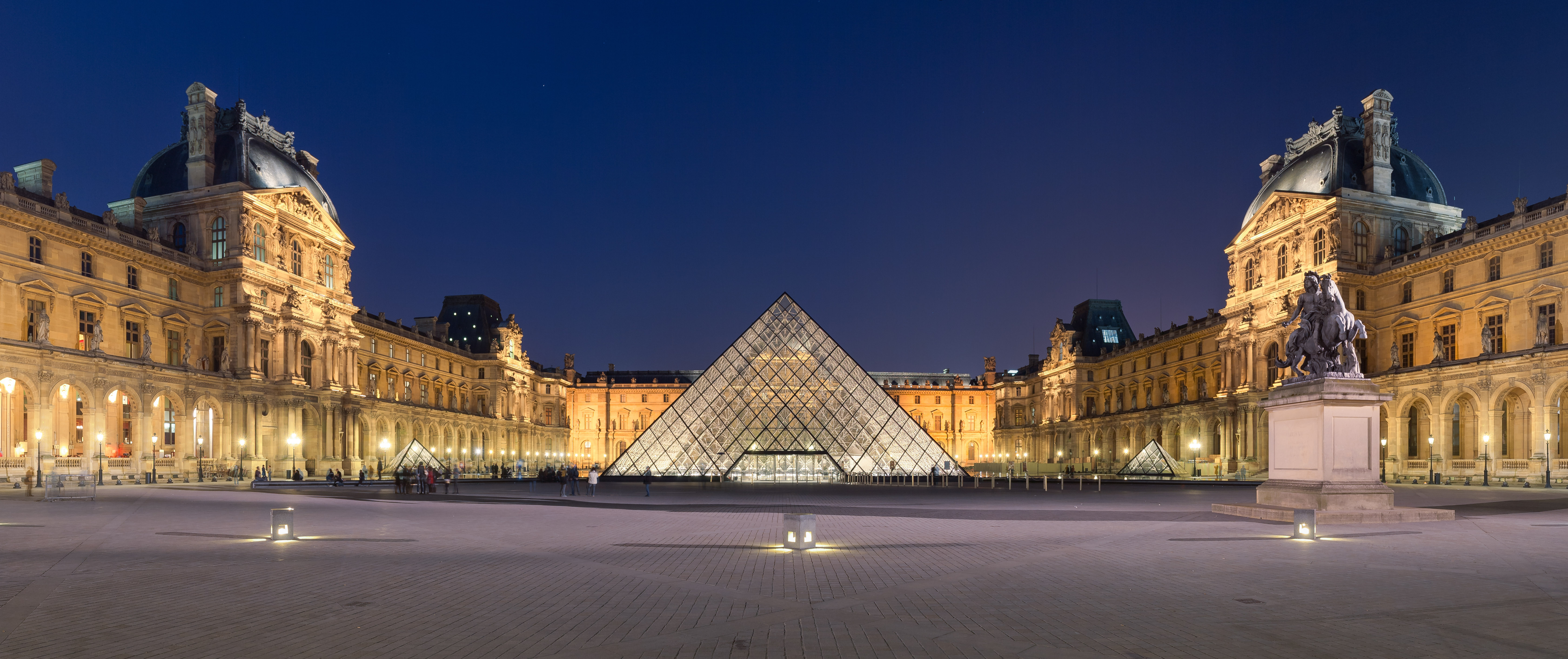
Thursday, May 12, 2016

Monuments Pt 3

Tuileries Garden
The Tuileries Garden (FrenchJardin des TuileriesIPA: [ʒaʁdɛ̃ de tɥilʁi]) is a public garden located between the Louvre Museum and the Place de la Concorde in the 1st arrondissement of Paris. Created by Catherine de Medici as the garden of the Tuileries Palace in 1564, it was eventually opened to the public in 1667, and became a public park after the French Revolution. In the 19th and 20th century, it was the place where Parisians celebrated, met, promenaded, and relaxed.[1]

Things I see:
1. Flowers
2. Fountains
3. Statues
4. Arch

5. Bridge
Pont Alexandre III
The Pont Alexandre III is a deck arch bridge that spans the Seine in Paris. It connects the Champs-Élysées quarter with those of the Invalides and Eiffel Tower. The bridge is widely regarded as the most ornate, extravagant bridge in the city.[2][3] It is classified as a French Monument historique.

https://upload.wikimedia.org/wikipedia/commons/d/d2/Pont-Alexandre-III-et-Invalides.jpg


Hotel De
Things I see:
1. Bridge
2. Seine
3. Eiffel Tower
4. Boats
5. Tourists
Ville
The Hôtel de Ville (French pronunciation: ​[otɛl də vil], City Hall) in Paris, France, is the building housing the city's local administration. Standing on the place de l'Hôtel-de-Ville in the 4th arrondissement, it has been the headquarters of the municipality of Paris since 1357. It serves multiple functions, housing the local administration, the Mayor of Paris (since 1977), and also serves as a venue for large receptions.

Things I see:
1. Chandiliers
2. Peaks
3. Tourists
4. Windows
5. Archs
Disneyland Paris
Disneyland Paris, originally Euro Disney Resort, is an entertainment resort in Marne-la-Vallée, a new town located 32 km (20 mi) east of the centre of Paris, and is the most visited theme park in all of France and Europe.[1] It is owned and operated by Euro Disney S.C.A., a publicly traded company in which The Walt Disney Company owns a majority stake.[2] The resort covers 4,800 acres (19 km2)[3] and encompasses two theme parks, several resort hotels, a shopping, dining, and entertainment complex, and a golf course, in addition to several additional recreational and entertainment venues. Disneyland Park is the original theme park of the complex, opening with the resort on 12 April 1992. A second theme park, Walt Disney Studios Park, opened in 2002. The resort is the second Disney park to open outside the United States, following the opening of the Tokyo Disney Resort in 1983.
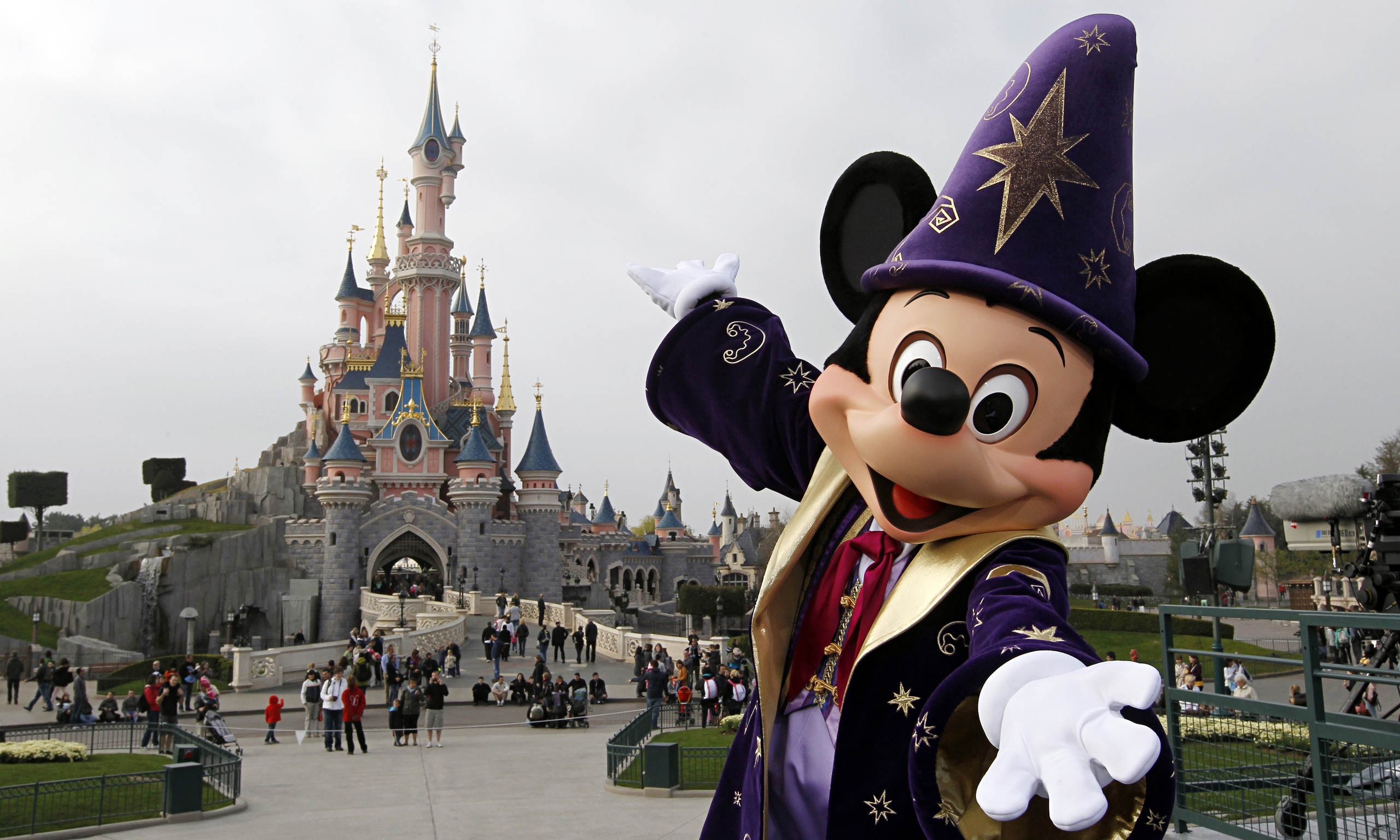
https://static.guim.co.uk/sys-images/Guardian/Pix/pictures/2014/10/6/1412620828059/Disneyland-Parid-014.jpg
Things I see:
1.
2.
3.
4.
5.
Place de Concord
The Place de la Concorde (French pronunciation: ​[plas də la kɔ̃kɔʁd]) is one of the major public squares in Paris, France. Measuring 8.64 hectares (21.3 acres) in area, it is the largest square in the French capital. It is located in the city's eighth arrondissement, at the eastern end of the Champs-Élysées.
https://upload.wikimedia.org/wikipedia/commons/f/f4/Place_de_la_Concorde_fountain_dsc00774.jpg
Things I see:
1.
2.
3.
4.
5.
Catacombs de Paris
The Catacombs of Paris (French: Catacombes de Paris, About this sound  ) are underground ossuaries in Paris, France which hold the remains of over six million people[1] in a small part of the ancient Mines of Paris tunnel network. Located south of the former city gate "Barrière d’Enfer" (Gate of Hell) beneath Rue de la Tombe-Issoire, the ossuary was founded when city officials were faced with two simultaneous problems: a series of cave-ins starting in 1774 and overflowing cemeteries, particularly Saint Innocents. Nightly processions of bones from 1786 to 1788 transferred remains from cemeteries to the reinforced tunnels, and more remains were added in later years. The underground cemetery became a tourist attraction on a small scale from the early 19th century, and has been open to the public on a regular basis since 1874 with surface access from a building at Place Denfert-Rochereau
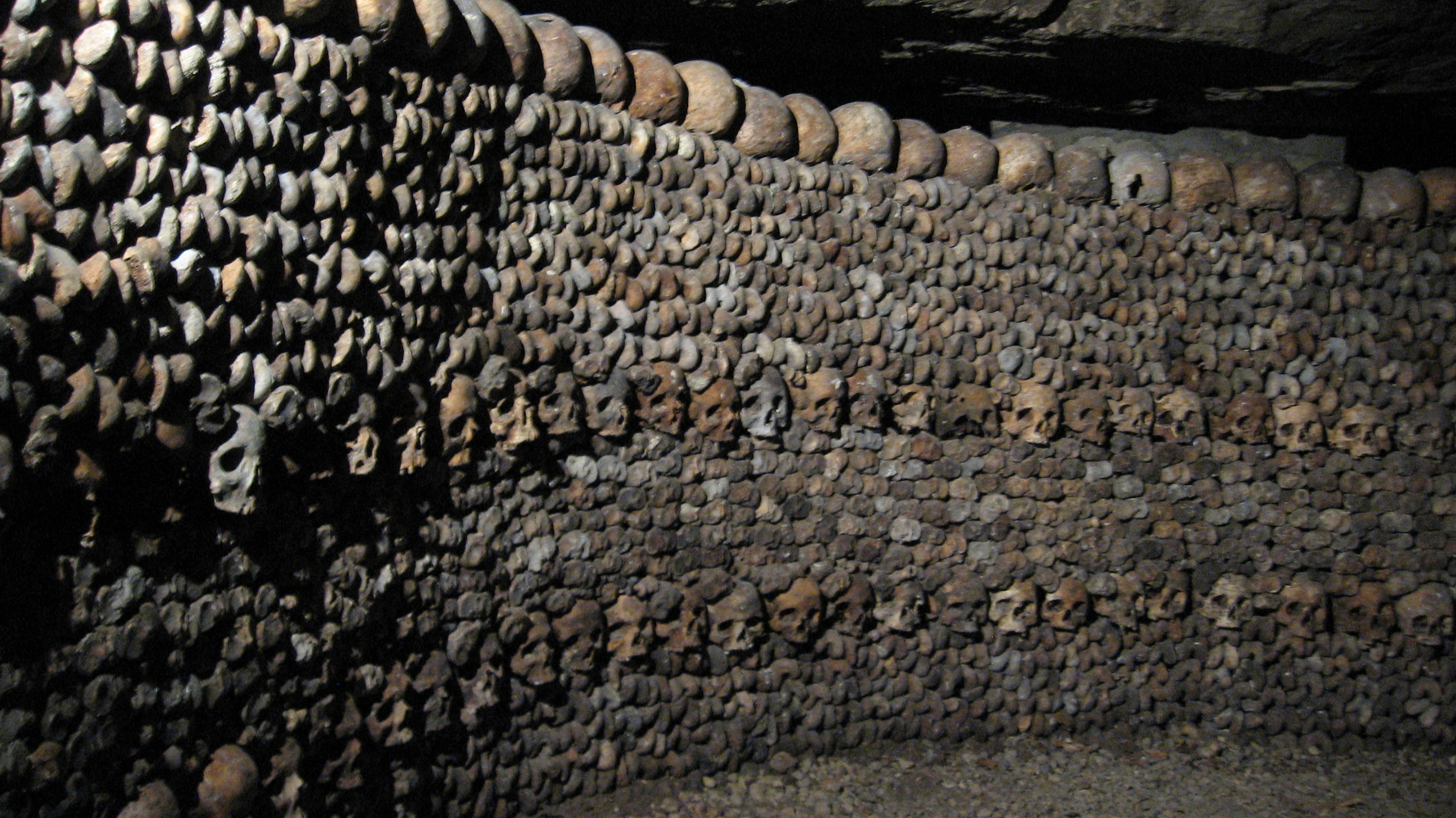
https://upload.wikimedia.org/wikipedia/commons/d/db/DJJ_1_Catacombes_de_Paris.jpg


Things I see:
1.
2.
3.
4.
5.
 The Latin Quarter
Known for its student life, lively atmosphere and bistros, the Latin Quarter is the home to a number of higher education establishments besides the university itself, such as the Lang–Martinez Psychiatric Hospital, the École des Mines de Paris, Panthéon-Assas University, the Schola Cantorum, and the Jussieu university campus. Other establishments such as the École Polytechnique have relocated in recent times to more spacious settings.
 http://journeytom.com/wp-content/uploads/2013/06/latin-quarter-in-paris.jpg
Things I see:
1.
2.
3.
4.
5.
 Saint Germain
The Benedictine Abbey of Saint-Germain-des-Prés (French pronunciation: ​[sɛ̃ ʒɛʁmɛ̃ de pʁe]), just beyond the outskirts of early medieval Paris, was the burial place of Merovingian kings of Neustria. At that time, the Left Bank of Paris was prone to flooding from the Seine, so much of the land could not be built upon and the Abbey stood in the middle of fields, or prés in French, thereby explaining its appellation.
https://upload.wikimedia.org/wikipedia/commons/3/39/Abbaye_de_Saint-Germain-des-Pr%C3%A9s_140131_1.jpg

Things I see:
1.
2.
3.
4.
5.
 Montmarte
 Montmartre (French pronunciation: ​[mɔ̃.maʁtʁ]) is a large hill in Paris's 18th arrondissement. It is 130 metres high and gives its name to the surrounding district, part of the Right Bank in the northern section of the city. The historic district established by the City of Paris in 1995 is bordered by rue Caulaincourt and rue Custine on the north; rue de Clignancourt on the east; boulevard de Clichy and boulevard de Rochechouart to the south.[1] containing sixty hectares.[2] Montmartre is primarily known for the white-domed Basilica of the Sacré-Cœur on its summit and as a nightclub district. The other, older, church on the hill is Saint Pierre de Montmartre, which claims to be the location at which the Jesuit order of priests was founded.

http://www.history-guided-tours.com/sites/history-guided-tours.com/files/75952/standard_product/104180/montmartre.jpg
Things I see:
1.
2.
3.
4.
5.

Monuments Pt 2

Versailles
The Palace of Versailles, or simply Versailles (English /vɛərˈs/ vair-sy or/vərˈs/ vər-syFrench: [vɛʁsaj]), is a royal château in Versailles in the Île-de-France region of France. It is also known as the Château de Versailles.


Things I see:
1. Trees= Des arbres
2. Walls=
3. Windows=
4. Gardens=
5. Flowers=

Jardin De Luxembourg
The Jardin du Luxembourg, or the Luxembourg Garden, located in the6th arrondissement of Paris, was created beginning in 1612 by Marie de' Medici, the widow of King Henry IV of France, for a new residence she constructed, the Luxembourg Palace. The garden today is owned by theFrench Senate, which meets in the Palace. It covers 23 hectares and is known for its lawns, tree-lined promenades, flowerbeds, the model sailboats on its circular basin, and for the picturesque Medici Fountain, built in 1620.[1]


Things I see:
1. Water=
2. Statues=
3. Fences=
4. Fountain=
5. Trees=
Sainte-Chapelle
The Sainte-Chapelle (French pronunciation: ​[sɛ̃t ʃapɛl]Holy Chapel) is a royal chapel in the Gothic style, within the medieval Palais de la Cité, the residence of the Kings of France until the 14th century, on the Île de la Cité in the heart of Paris, France.


Things I see:
1. Windows=
2. Lights=
3. Candles=
4. Chandeliers=
5. Arches=
Palais Garnier
The Palais Garnier (pronounced: [palɛ ɡaʁnje] French About this sound  ) is a 1,979-seat opera house, which was built from 1861 to 1875 for the Paris Opera. It was originally called the Salle des Capucines, because of its location on the Boulevard des Capucines in the 9th arrondissement of Paris, but soon became known as the Palais Garnier, in recognition of its opulence and its architect, Charles Garnier. The theatre is also often referred to as the Opéra Garnier (French About this sound  ) and historically was known as the Opéra de Paris or simply the Opéra,[7] as it was the primary home of the Paris Opera and its associated Paris Opera Balletuntil 1989, when the Opéra Bastille opened at the Place de la Bastille.[8]The Paris Opera now mainly uses the Palais Garnier for ballet.


Things I see:
1. Statues
2. Pillars
3. Candles
4. Paintings
5. Domes
Les Invalides
Les Invalides (French pronunciation: ​[lezɛ̃valid]), commonly known as Hôtel national des Invalides (The National Residence of the Invalids), or also asHôtel des Invalides, is a complex of buildings in the 7th arrondissement ofParisFrance, containing museums and monuments, all relating to the military history of France, as well as a hospital and a retirement home for war veterans, the building's original purpose. The buildings house the Musée de l'Armée, the military museum of the Army of France, the Musée des Plans-Reliefs, and theMusée d'Histoire Contemporaine, as well as the Dôme des Invalides, a large church with the burial site for some of France's war heroes, most notablyNapoleon Bonaparte (lists below).


Things I see:
1. Domes
2. Cars
3. Grass
4. Windows
5. People


Thursday, April 21, 2016

Monuments


Constructed in 1889 as the entrance to the 1889 World's Fair, it was initially criticized by some of France's leading artists and intellectuals for its design, but it has become a global cultural icon of France and one of the most recognizable structures in the world.[3] The Eiffel Tower is the most-visited paid monument in the world; 6.91 million people ascended it in 2015.

Things I can see:
1. Long steel beams= poutres en acier longues
2. Many trees= beaucoup des arbres
3. The Seine= La Seine
4. Grass Garden/Park= Herbe Jardin / Parc
5. Many cars= Beaucoup de voitures

The Louvre or the Louvre Museum (FrenchMusée du Louvre,pronounced: [myze dy luvʁ]) (French About this sound  ) is one of the world's largestmuseums and a historic monument in ParisFrance. A central landmark of the city, it is located on the Right Bank of the Seine in the 1st arrondissement(ward). Nearly 35,000 objects from prehistory to the 21st century are exhibited over an area of 60,600 square metres (652,300 square feet). The Louvre is the world's most visited museum, receiving more than 9.26 million visitors in 2014.[1]It is also one of the largest.

Things I can see:
1. Statues= Les statues
2. Large glass panes= Les grandes vitres
3. Paintings= La tableaux
4. Pillars= Les statues
5. Artists= Les Artistes


Notre-Dame de Paris (IPA: [nɔtʁə dam də paʁi](French About this sound  ) ; French for "Our Lady of Paris"), also known as Notre-Dame Cathedral or simply Notre-Dame, is a medieval Catholic cathedral on the eastern half of the Île de la Cité in the fourth arrondissement of ParisFrance.[3] The cathedral is widely considered to be one of the finest examples of French Gothic architecture, and it is among the largest and most well-known church buildings in the world. The naturalism of its sculptures and stained glass are in contrast with earlier Romanesque architectur

Things I can see:
1. Gargoyles= Les gargouilles
2. Bells= Les cloches
3. Stained glass windows= Les vitraux
4. La Seine= La Seine
5. Tall towers= Les tours hautes

Arc De Triomphe
The Arc de Triomphe de l'Étoile (French pronunciation: [aʁk də tʁijɔ̃f də letwal]Triumphal Arch of the Star) is one of the most famous monuments in Paris. It stands in the centre of the Place Charles de Gaulle(originally named Place de l'Étoile), at the western end of the Champs-Élysées.[3]It should not be confused with a smaller arch, the Arc de Triomphe du Carrousel, which stands west of the Louvre. The Arc de Triomphe honours those who fought and died for France in the French Revolutionary and theNapoleonic Wars, with the names of all French victories and generals inscribed on its inner and outer surfaces. Beneath its vault lies the Tomb of the Unknown Soldier from World War I.


1. Roads= Routes
2. Champs Elysee= Champs Elysee
3. Trees= Des arbres
4. Tourists= Des touristes
5. Cars= Des voitures
Sacre-Coeur
The Basilica of the Sacred Heart of Paris, commonly known as Sacré-Cœur Basilica and often simply Sacré-Cœur (FrenchBasilique du Sacré-Cœur, pronounced [sakʁe kœʁ]), is a Roman Catholic church and minor basilica, dedicated to the Sacred Heart of Jesus, in ParisFrance. A popular landmark, the basilica is located at the summit of the butte Montmartre, the highest point in the city. Sacré-Cœur is a double monument, political and cultural, both a national penance for the defeat of France in the 1871 Franco-Prussian War and the socialistParis Commune of 1871[1] crowning its most rebellious neighborhood, and an embodiment of conservative moral order, publicly dedicated to the Sacred Heart of Jesus, which was an increasingly popular vision of a loving and sympathetic Christ.[2]


1. Horses= Les chavaux
2. Grass= Le herbe
3. Domes= Les domes
4. White Bricks= Les briques blanches
5. Tourists= Touristes
Musee d'Orsay
The Musée d'Orsay (French pronunciation: ​[myze dɔʁsɛ]) is a museum in Paris, France, on the left bank of the Seine. It is housed in the former Gare d'Orsay, aBeaux-Arts railway station built between 1898 and 1900. The museum holds mainly French art dating from 1848 to 1914, including paintings, sculptures, furniture, and photography. It houses the largest collection of impressionist andpost-Impressionist masterpieces in the world, by painters including Monet,ManetDegasRenoirCézanneSeuratSisleyGauguin and Van Gogh. Many of these works were held at the Galerie nationale du Jeu de Paume prior to the museum's opening in 1986. It is one of the largest art museums in Europe.


1. Seine= La Seine
2. Windows= Les fenetres
3. Arches= Les arches
4. Boats= Les bateaux
5. Art work= Des Oeuvre